
Heart Care
Cardiac Catheterization
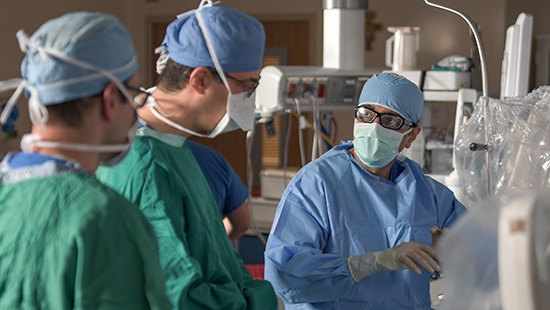
Cardiac catheterization, also known as a coronary angiogram, is a special imaging study that allows a cardiologist to identify and treat blocked coronary arteries and other complex heart problems. Cardiac catheterization (cardiac cath) is used as both a diagnostic and treatment tool. It measures blood pressure and blood flow in the heart and helps identify problems with the heart valves, chambers and coronary arteries. If a cardiologist identifies an problem while performing a cardiac catheterization, he or she can treat the problem, immediately.
The interventional cardiologists at University of Maryland St. Joseph Medical Center are among the most experienced in the region, providing patients with the highest level of heart care and the very latest in interventional approaches.
Who Needs a Cardiac Catheterization?
There are several reasons a doctor may order a cardiac catheterization. This minimally invasive procedure is an effective diagnostic tool for a variety of heart conditions. Patients may need a cardiac cath if they have:
- Hardening or clogging of the arteries, known as atherosclerosis, which can lead to a heart attack
- An enlarged heart, also called cardiomyopathy, which causes weakening of the heart muscles
- Suffered a previous heart attack
- Experienced chest pain, dizziness or symptoms of heart disease
- Had an abnormal electrocardiogram or stress test
What Happens If a Blockage is Found During the Cardiac Cath Procedure?
Blockages caused by a build-up of plaque in the coronary arteries can lead to a heart attack. Interventional coronary procedures are used to open the narrowed arteries in the heart to improve blood flow and reduce symptoms without requiring surgery. The procedures can be completed at the time of the diagnostic cardiac cath or, in some cases, may require scheduling of a separate appointment.
Angioplasty and Stenting
If a doctor finds a blockage during a cardiac catheterization procedure, he or she will perform an angioplasty to remove it. The doctor will insert a soft wire carrying a balloon and a stent into the catheter, to be transported to the site of the blockage. Some stents may be coated with medication to reduce the likeliness of the coronary artery becoming blocked with plaque again.
After the balloon has reached the narrowed section of the coronary artery, it will be inflated with high pressure. This pressure will push open the blockage, allowing for placement of a stent within the newly cleared area. The stent will be expanded tightly against the artery wall so normal blood flow to the heart can resume. The entire procedure typically takes 60 to 90 minutes.
Is Cardiac Catheterization Painful?
Cardiac catheterization is typically not painful. Some patients report mild discomfort that lasts for a few seconds when receiving the injection. The patient may be given a mild sedative, which will help them relax during the procedure.
How Long Is Recovery Following Cardiac Catheterization?
Most patients recover well, with minimal pain or discomfort, within 24 hours after cardiac catheterization. Rest and restricted activity is recommended for 24 hours after the procedure. Your doctor will talk to you about when you can resume normal activities or return to work.
It is important to go to the doctor for follow-up visits as recommended. Patients should call their doctor if they are experiencing any unusual symptoms, including:
- Pain, redness, bleeding, drainage or increased swelling at the insertion site
- Pain or burning in the chest
- Rapid or pounding heartbeat
- Severe pain, coldness, numbness or discoloration in the limb where the catheter was inserted
- A fever of more than 100°F
- New or increasing shortness of breath
- Difficulty breathing, swallowing, throat pain, or bloody cough
- Redness or rash on the chest or back
For a physician referral to a cardiologist, please call 410-337-1216.